


Prostatitis is a male disease that not only causes discomfort in everyday, intimate life, but also brings painful sensations that can manifest themselves in different degrees of severity.In most clinical cases, treatment is carried out using conservative methods; much less often, when it transforms into a tumor, surgical intervention may be prescribed.One of the main conditions for the success of therapy is an integrated approach to the patient’s recovery.Treatment should be based not only on taking medications, but also on following a proper diet and including physical exercise in your daily routine - it is the latter that will be discussed in this article.
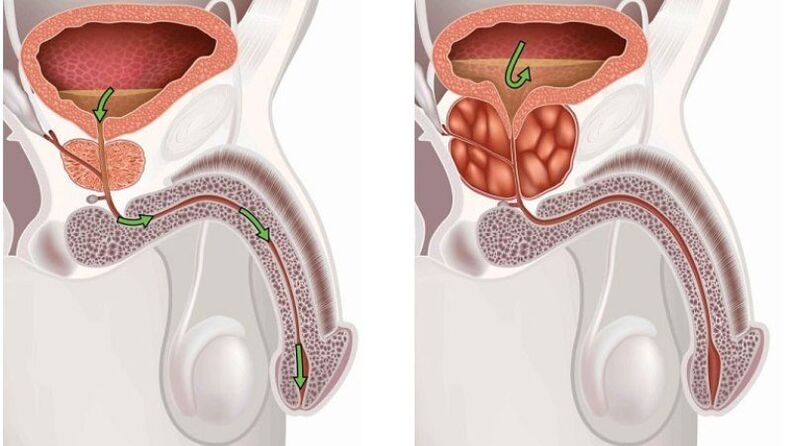
Features of the prostate gland
The prostate gland is the main organ of the male body, which is responsible for reproductive functions.The prostate is located in the area of the genitourinary system; the main task of this organ is to ensure the normal process of secreting a transparent secretion - this substance is released when a man is in an excited state.
Why does the prostate activate secretion production?This substance ensures the normal functioning of the organs of the reproductive system, acts as a protective barrier, is a natural, natural lubricant, delivers nutrients to sperm and significantly increases their level of mobility.
In addition, the prostate gland controls the functioning of the urinary system.The prostate contains smooth muscles that control the degree of filling and emptying of the bladder.
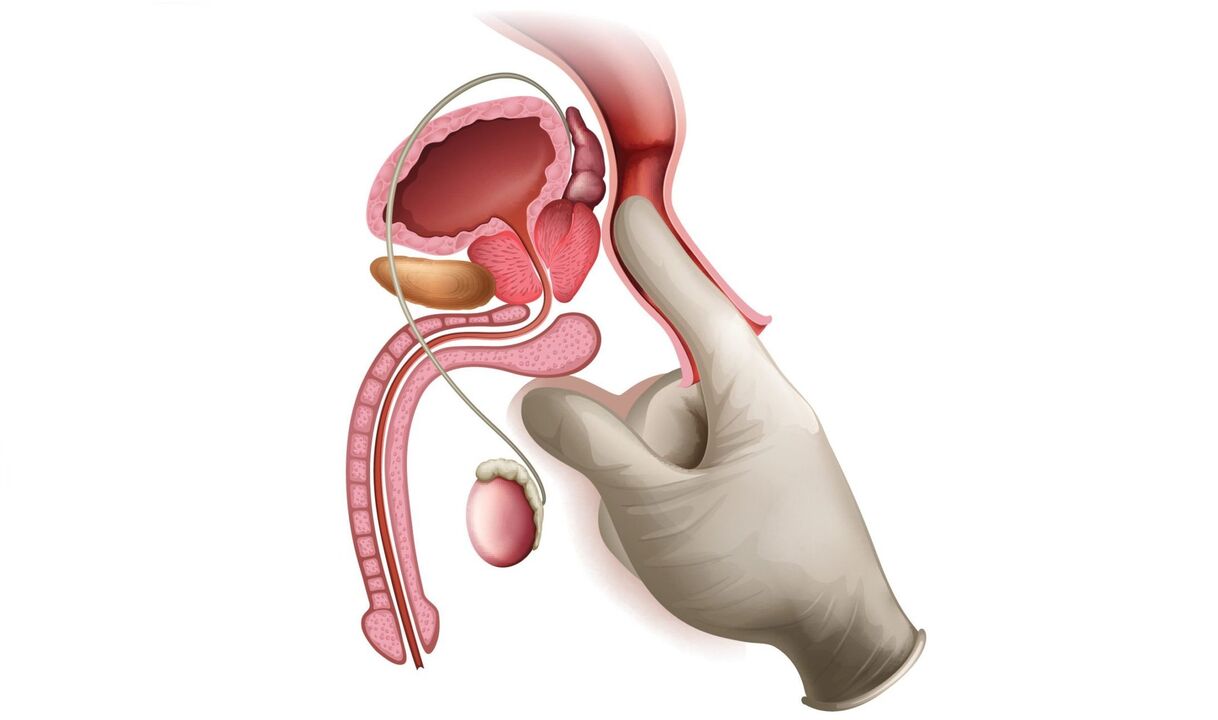
Experts say that the anatomy of the male body requires the functioning of the prostate.Otherwise, serious violations may occur and dangerous pathologies may arise.It is important to ensure proper functioning of the prostate; special sports exercises will be an excellent help not only during the recovery period, but also as preventive measures.
Prostatitis
With prostatitis, an inflammatory process is diagnosed, as a result of which pathogenic microorganisms, infectious agents of a variable nature, and representatives of bacterial flora can enter the internal environment of the body through the urethral canal.
Correctly, with inflammation of the prostate gland, a man feels the following signs:
- Soreness, of various types;
- Discomfort when urinating, possible pain, cutting, burning sensation;
- Uncharacteristic discharge along with urine (mucous impurities, streaks of blood);
- Urine changes color and becomes cloudy;
- There is discomfort during sexual intercourse, pain, and unpleasant sensations of “stiffness”;
- Problems with erection are diagnosed; in advanced cases, it is completely absent;
- Disorders of the ejaculation process;
- Hormonal imbalance.
These symptoms can greatly disrupt your previously habitual lifestyle.Men feel discomfort during sexual intercourse, and their “male” functions noticeably decrease.Hormone imbalance makes itself felt in the form of external manifestations:
- A man's mammary glands may become noticeably enlarged;
- The belly becomes more rounded;
- Some people notice a lack of sexual desire.
If you do not notice the symptoms in time, the disease can develop into an advanced stage, which entails the formation of a benign or malignant tumor.Today, there are many methods for early diagnosis of prostatitis, which makes it possible to get rid of the causes of the pathology even before the onset of the main symptoms of the disease.
Proper treatment can prevent relapses and completely restore the functioning of the prostate gland.
The benefits of exercise for prostatitis
For inflammatory processes in the prostate gland, high-quality, effective therapy should include a whole range of therapeutic measures aimed at obtaining quick and lasting results.As a rule, doctors do not make do with just medications, but also prescribe physiotherapeutic procedures, therapeutic massages, nutritional correction, and also advise regular exercise, which is good for the prostate.
Gymnastics for the prostate gland is always indicated during the rehabilitation period.Exercises are also useful as a preventive measure, as they help prevent the development of pathologies of the genitourinary system, maintain the prostate in tone, and preserve its natural functions.
What are the benefits of exercise for prostatitis?The following advantages can be highlighted:
- With regular exercise, the muscle tone of the lower extremities, abs and gluteal area is noticeably strengthened;
- The muscle tissue in the perineal area is stimulated;
- Blood flow in the pelvis is normalized;
- There is a beneficial effect on the joints of the hip area;
- The functioning of the nervous system is supported.
Doctors advise doing exercises as often as possible and not skipping training days.The effectiveness depends entirely on how often the patient practices and how much effort he puts into the process.
However, you should not burden yourself with excessive activities.The exercises performed should not cause pain or discomfort to the patient; only slight tension is possible, which indicates the effectiveness of the training.
Preparation
In order to begin a course of exercises to improve the condition of the prostate gland, you need to clearly understand the physiology of the body and know where exactly this organ is located.There are two main ways to understand where the prostate is:
- The prostate gland can be felt between the anus and scrotum.The patient needs to place his finger two centimeters from the anus and apply a pressing movement; during such manipulations, the round base, which is the prostate, should be felt.To make it easier to feel the gland, doctors advise using this method during sexual intercourse, since at this moment it includes a lot of secretory fluid and is pronounced.
- The second method is called “rectal”.A finger is inserted into the anus approximately 6 centimeters and the walls of the rectum are probed until a round bulge is detected, which is the prostate gland.
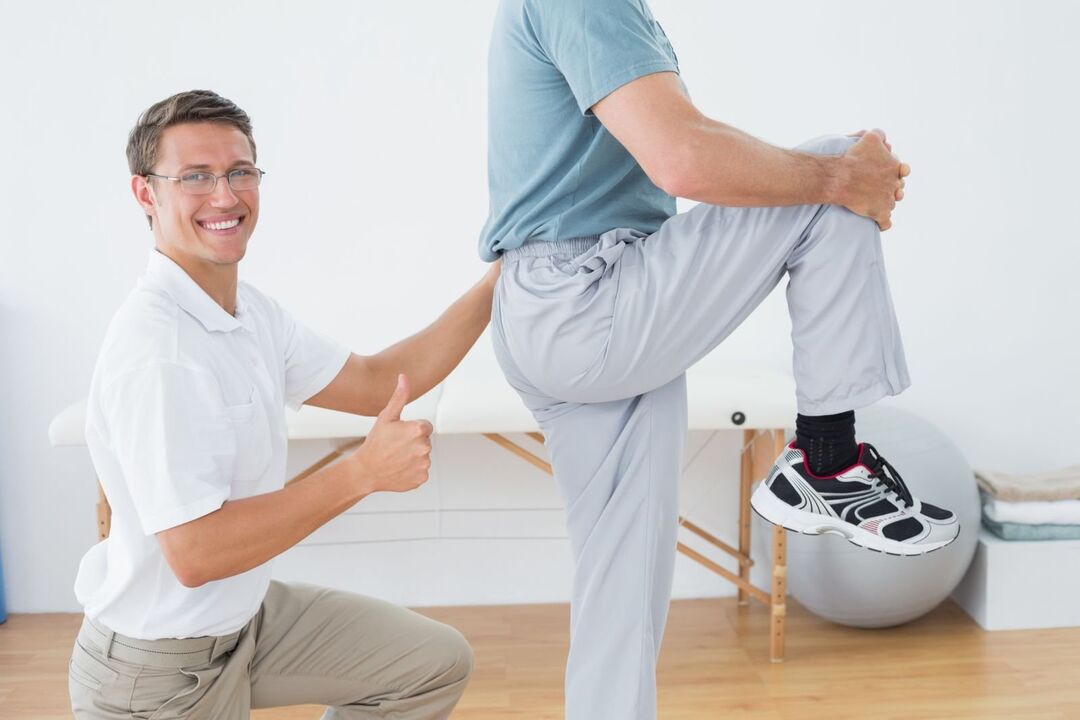
The course of exercises should be prescribed by the attending doctor, who determines the patient’s condition.Classes are not performed during acute periods, when a man suffers from severe pain or experiences severe discomfort in the perineum and anal area.
Exercises for chronic prostatitis
Chronic prostatitis is particularly difficult for both doctors and patients.The disease is in an advanced stage, which has become chronic.Sometimes it proceeds mainly without pronounced symptoms; during the period of exacerbation, pain, discomfort during sexual intercourse, impaired urination, and uncharacteristic discharge may appear.
A special set of physical exercises will help alleviate the patient’s condition and restore the functionality of the prostate gland.
Exercise No. 1
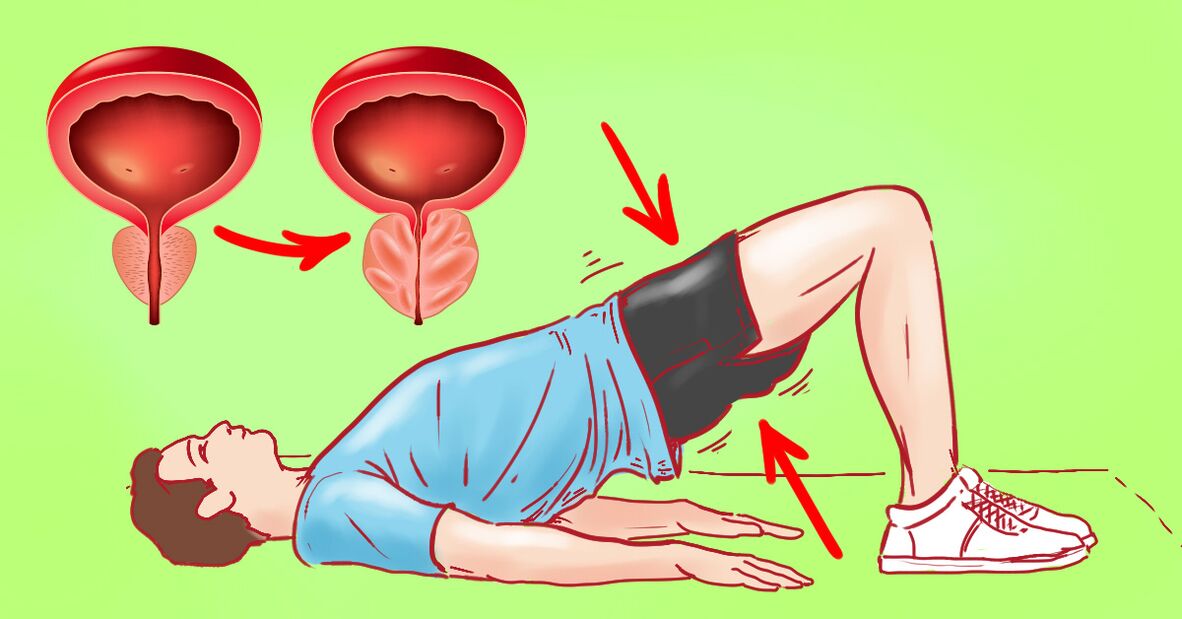
The patient needs to take a “lying” position on his back, with his arms extended along the entire body.The patient needs to lean slightly on his feet and begin to bend his knees; it is important to do this very carefully, slowly and smoothly.You should pull your legs towards you and at the same time spread your knees to the side.Return to original position.The exercise is repeated from 12 to 16 times.
Exercise No. 2
A man needs to lie on his back on a hard surface, with his arms extended straight across his body.Bend your legs at the knees, bring your feet together.Then you need to spread your knees to the maximum, perform the movement smoothly and slowly.Return the lower limbs to their original position, while trying to strain them to the maximum.As a final action, you need to firmly press your knees together and wait 10 seconds.The exercise is repeated 14-20 times.
Exercise No. 3
The patient needs to lie on his stomach and stretch his arms along the entire body.The right leg bends at the knee, rises upward at a slow pace, and also slowly lowers down.You should not raise your leg as high as possible; you need to monitor the quality of execution.The exercise should be repeated 10 times on each leg.
Exercise #4
The patient needs to stand up and place his feet shoulder-width apart.Slow squats are performed (not all the way), while the arms are brought forward.When the patient returns to the starting position, the legs do not straighten.The most important thing is to perform squats with a small amplitude.Must be repeated 6-8 times.
Gymnastics for congestive prostatitis
For congestive prostatitis, the doctor prescribes a specialized set of classes.
Exercise No. 1
This exercise is called “walking on the buttocks” and must be performed on the floor in a sitting position.The hips are raised one by one, the movement being performed in such a way that the performer moves forward.Particular attention should be paid to the technique of execution - it should be competent and smooth, there is no need to rush.
Exercise No. 2
To perform this exercise you will need a ball.The exercise can be performed in two positions (lying, standing).The idea is to squeeze the ball between your thighs and hold it for as long as possible.This exercise has a beneficial effect on the condition of the prostate gland, significantly improving blood circulation in this organ.
Exercise No. 3
The essence of the exercise is that you need to pull up the lower limbs by weight.The patient should sit on the floor and slightly tilt the body to the back.Legs are extended straight, hands should be on the floor with a strong emphasis.You need to raise your feet 20 cm up, pull your legs to your chest, bending them at the knees.It is recommended to repeat the exercise 20-25 times.
Exercise #4
You should lie on your back, stretch your legs forward.The man should begin to smoothly spread and close the limbs of his feet.It is important to start with smooth movements and move to an accelerated pace.The exercise should be performed for a minute.
Exercise #5
This exercise is called “jumping”.When doing this, you need to pull your kneecaps up as much as possible.During the jump, the knees should be positioned at the level of the chest.Perform about 15 jumps in one approach, 3 approaches are recommended.
Preventive exercises
Unfortunately, only a small proportion of patients pay sufficient attention to the prevention of prostatitis.High-quality rehabilitation after an acute period plays an important role.
Doctors recommend including a course of physical therapy in your treatment, trying to get rid of bad habits, choosing proper nutrition and engaging in effective exercises.
The most effective exercises for the prevention of prostatitis are:
- Exercise is useful not only for the prostate gland, but also for normalizing the functioning of the rectum.The patient should stand on his kneecaps, move his feet to the back, and spread his heels.It is necessary to try to keep your knees in a flattened position for as long as possible, move to a sitting position on your feet, and place your palms on the knees.In this position, the man needs to squeeze the anal sphincter muscles for 10 seconds, then relax them.Perform 20-30 repetitions.
- The condition for the next lesson is an empty stomach.A man needs to take a “standing” position, lean forward 45 degrees, place his palms on his knees.When taking a deep breath, you need to pull in the abdominal muscles.It is recommended to hold this position until a feeling of slight discomfort arises.Finally, exhale slowly and relax the muscles.
- The patient comes close to the wall, the right leg is bent at the knee, the foot should rest against the wall.Then you need to start slowly bending your left leg, at which time you perform a squat.This exercise is an effective stretch for the inner thigh muscles, which has a beneficial effect on the activity of the prostate gland.It is recommended to repeat 10 times.
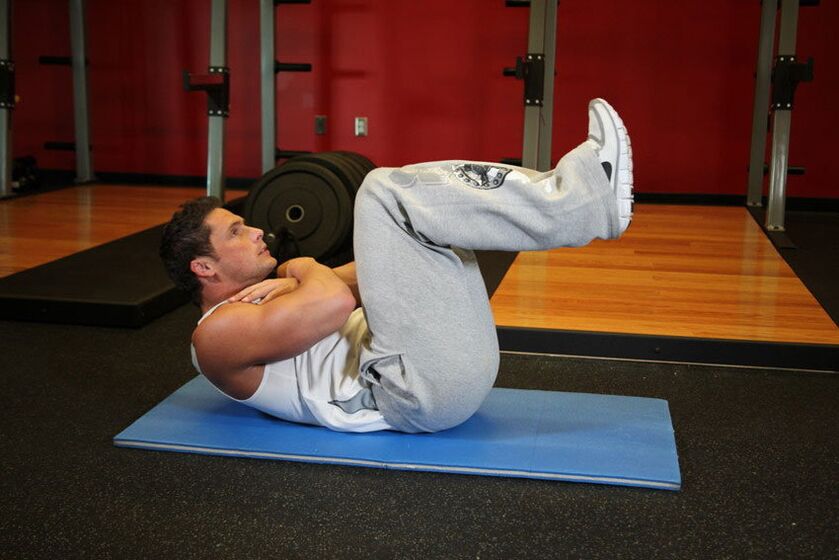
- The patient lies down on the floor, tries to raise his knees up, with the lower limbs parallel to the floor.Then the man performs the well-known “bicycle” exercise, with his feet pointing upward.It is recommended to repeat the exercise 15 times.
Doctors' recommendations
In order for exercise courses to bring maximum benefit, you must follow the recommendations of your doctor.It is important to pay due attention to the technique of execution, as well as to comply with all conditions.During the period of appointment of classes, the patient should not experience severe pain, health should be satisfactory.
Useful tips from competent specialists:
- If you start doing one exercise, then you need to finish it to the end.It is not recommended to abruptly interrupt the lesson and move on to others.The load imposed must be uniform in order to have a beneficial effect on the blood circulation process.
- How to understand that the exercise is performed correctly and achieve the desired effect?Doctors say that when performed correctly, at the end of the exercises, a feeling of warmth appears in the pelvic area.
- When performing absolutely any exercise for prostatitis, an additional advantage will be frequent squeezing/unclamping of the anus muscles - such an addition will help quickly eliminate congestion and improve the condition of the prostate gland.
- Before starting physical therapy for the prostate, it is advised to take time to warm up, which will help warm up the body and muscles before an effective workout.
Contraindications
It is worth noting that not everyone is recommended for therapeutic exercises for prostate disease.Doctors say that the prostate gland is a vital, but at the same time extremely vulnerable organ.
That is why there are contraindications to performing exercises:
- The period after surgery (up to 6 months);
- Acute period of existing pathologies of internal organs;
- Presence of fever and heat, low-grade temperature (up to 38.5 degrees);
- Previous stroke, heart attack;
- The presence of viral and infectious diseases;
- Diagnosis of aortic aneurysm;
- Presence of an inguinal hernia;
- Abdominal hernia;
- Intervertebral hernia;
- High blood pressure;
- Prostatitis in aggravation.
Doctors urge patients not to ignore existing contraindications.Otherwise, undesirable consequences may develop, sometimes life-threatening for the patient.You should perform all exercises carefully, paying attention to the condition of your body.
Reviews
- First review.“Prostatitis gave me many problems that developed into complexes. After drug treatment, I was prescribed a course of physiotherapy and physical therapy. At first, I did all the exercises under the supervision of a doctor, who corrected my technique. Now I have been exercising at home for two months and I feel positive results. I feel much better, the pain has disappeared, and congestion has been eliminated.”
- Second review.“Despite my young age, I was faced with a diagnosis of prostatitis. Fortunately, timely consultation with a doctor and modern diagnostic methods made it possible to prevent the development of chronic prostatitis; the exercises that I performed daily became a huge help. I can assure you that a well-chosen course of exercise will not only alleviate the condition, but also restore the normal functioning of the prostate gland.”
- Third review.“Prostatitis completely disrupted the hormonal balance and intimate life. The doctor advised me to start exercising according to the scheme that he described to me in detail. Within three months I had the same erection, I got rid of congestion, the pain disappeared. I still do the exercises as a preventive measure.”